2/24/2021
Not Yet Imagined: A Study of Hubble Space Telescope Operations (Jan 2021) NASA publication which covers the amateur programs history. Due out in PRINT in a few months | Amazon (Kindle and print coming)
Ralph Lorenz's new book on Titan Aug 2020 Saturn's Moon Titan: From 4.5 billion years ago to the present - An insight into the workings and exploration of the most Earth-like world in the outer solar system (Owners' Workshop Manual) Hardcover – August 25, 2020
2/24/2021
Not Yet Imagined: A Study of Hubble Space Telescope Operations (Jan 2021) NASA publication which covers the amateur programs history. Due out in PRINT in a few months | Amazon (Kindle and print coming)
Ralph Lorenz's new book on Titan Aug 2020 Saturn's Moon Titan: From 4.5 billion years ago to the present - An insight into the workings and exploration of the most Earth-like world in the outer solar system (Owners' Workshop Manual) Hardcover – August 25, 2020
-
experience and
how I applied for access as an amateur to use the Hubble to research Titan . And of course
-
the scientific and observation end of it
The video of Voyager 1 at Saturn back in 1981 Video that changed my life 10 years later with Toby

 LinkedIn
|
LinkedIn
|  Research Gate
JUMP to Select Page/Folder/PDFs:
WHY TITAN? See Titan and Earth comparisons:
Click here to see Comparisons of Titan and Earth see what lured me to study Titan!! (images, videos, tables, references)
Temperature comparison
temperature comparison of Titan in Kelvin.
The video of Voyager 1 at Saturn Video that changed my life 10 years later !
Page of news, links and references
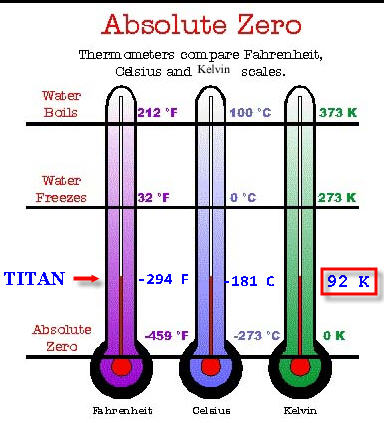
Table of Planetary Atmospheres
NASA and ESA Celebrate 10 Years Since Titan Landing Jan 14, 2015
Hubble's 25th !!!! April 2015
Hubble at 25 hailed as greatest scientific instrument USA TODAY
the submarine NASA wants to send to Titan
- Titan Through Time 4 being in 2017
- Titan Through Time April 2014 at Johns Hopkins University Applied Physics Laboratory
- just attended Titan Through Time conference just ended at NASA GSFC April 2012
- Links and Additional Information of My Hubble Telescope Research of Titan along with Scanned PDFs of my acceptance letter & letters from Dr Gerhard Herzberg ("Mr. Molecule")
-
My letter from Carl Sagan | along with communication with Dr Sagan and Titan notes he sent me
About my Hubble Research of Titan
How Voyager 1, Titan, Hydrogen Cyanide and Formaldehyde changed my life !!
-
My HST proposal to research Titan
This segment of the documentary with Toby Owen highlighting Hydrogen Cyanide in 1981 together with
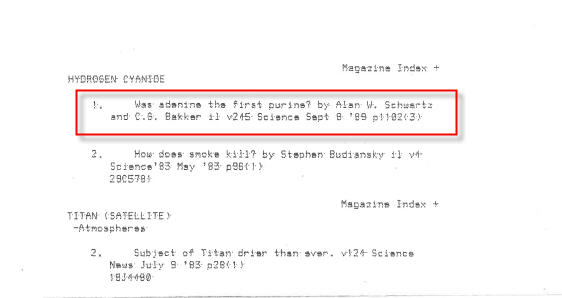
this is the article where I found the Formaldehyde & Hydrogen Cyanide connection that was the basis for my proposal and research
- Here is a diagram of how my observation occurred and
 illustration of of my data complexity
 Frequently Asked Questions ( FAQaA's) and Answers
- assorted Images, diagrams from my observation and references
- assorted Files (PDFs)
- Click here to see Comparisons of Titan and Earth see what lured me to study Titan!! (images, videos, tables, references)
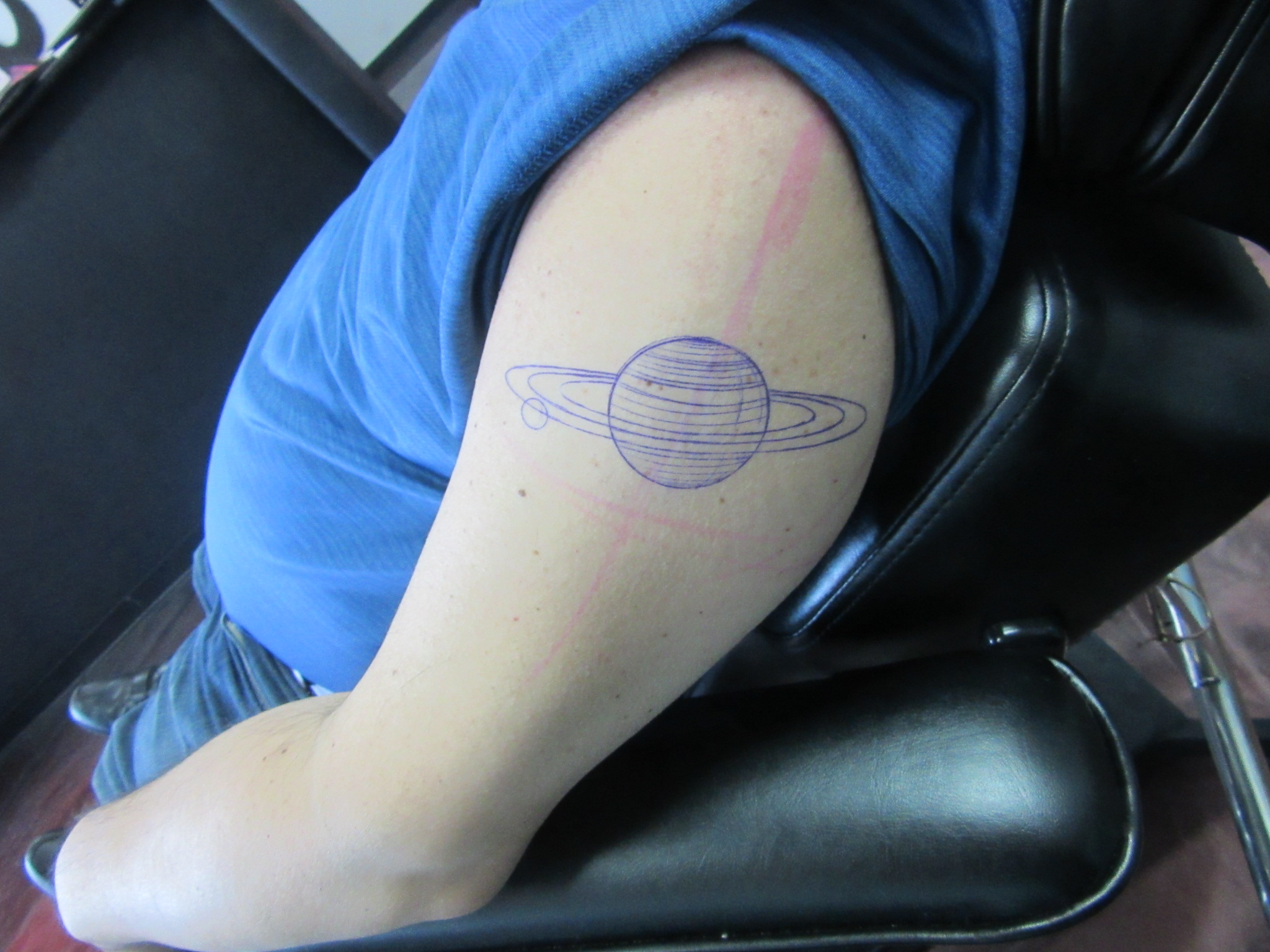
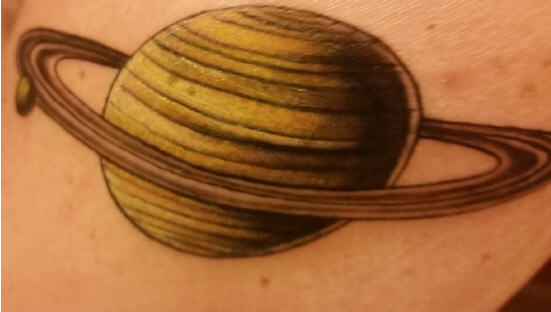
- 11/17/2016 - My long awaited Saturn & Titan tattoo that I got in Las Vegas for my 50th BEFORE AND AFTER | images me and the artists worked from
- WHY TITAN? See Titan and Earth comparisons: Comparison of Titan and Earth see what lured me to study Titan!! (images, videos, tables, references)
- Amateur Astronomers Will Use NASA's Hubble Space Telescope Press Release back in 1992
- My Collection of Spectra & Spectroscopy links
- My SPACEPLACES site of 'space' related places I've visited worldwide
- Biography and technical documentation including my proposal and scheduling templates
- from Max Mutchler: Amateur Astronomers and the Hubble Space Telescope
- Top 10 Discoveries of Titan (ESA)
- Images of Titan from Cassini JPL's Cassini Solstice Mission website
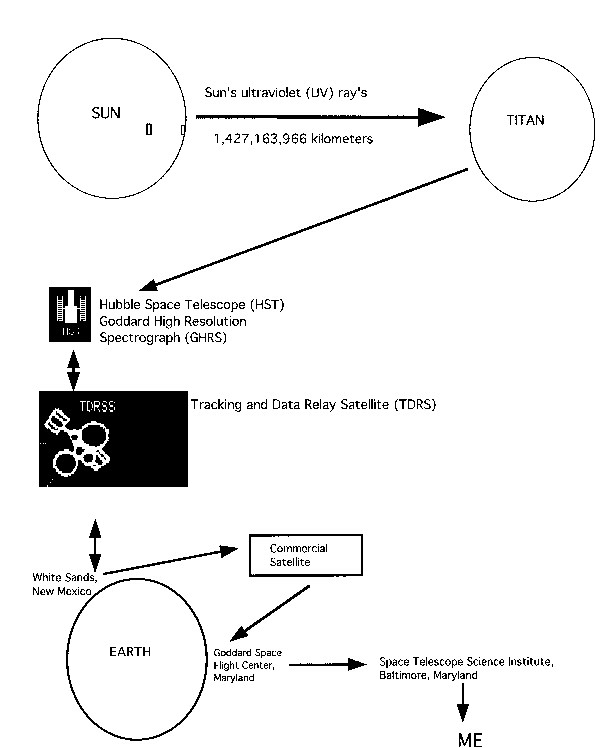
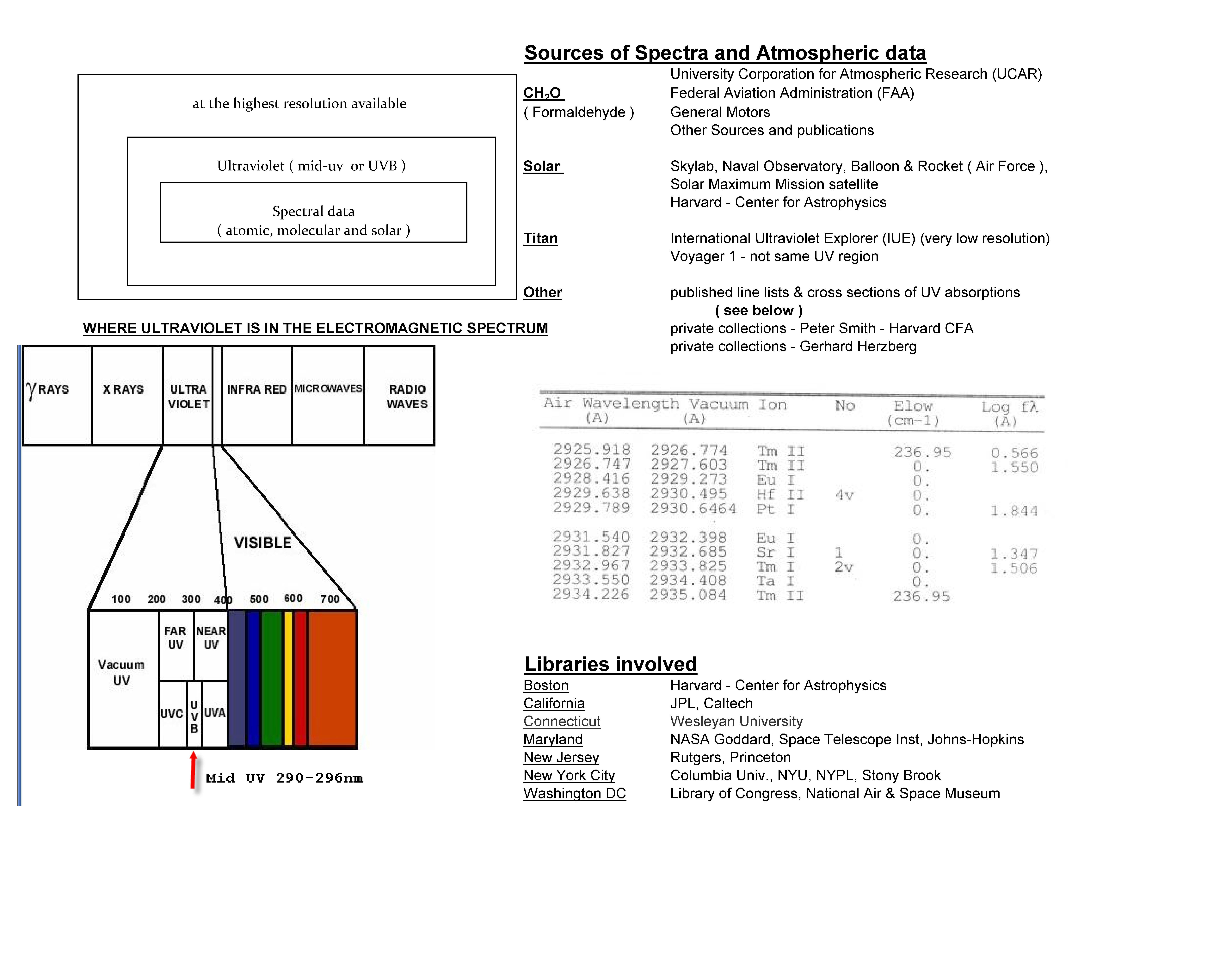
Diagram illustrating the complexity of my data and the data processing and research involved
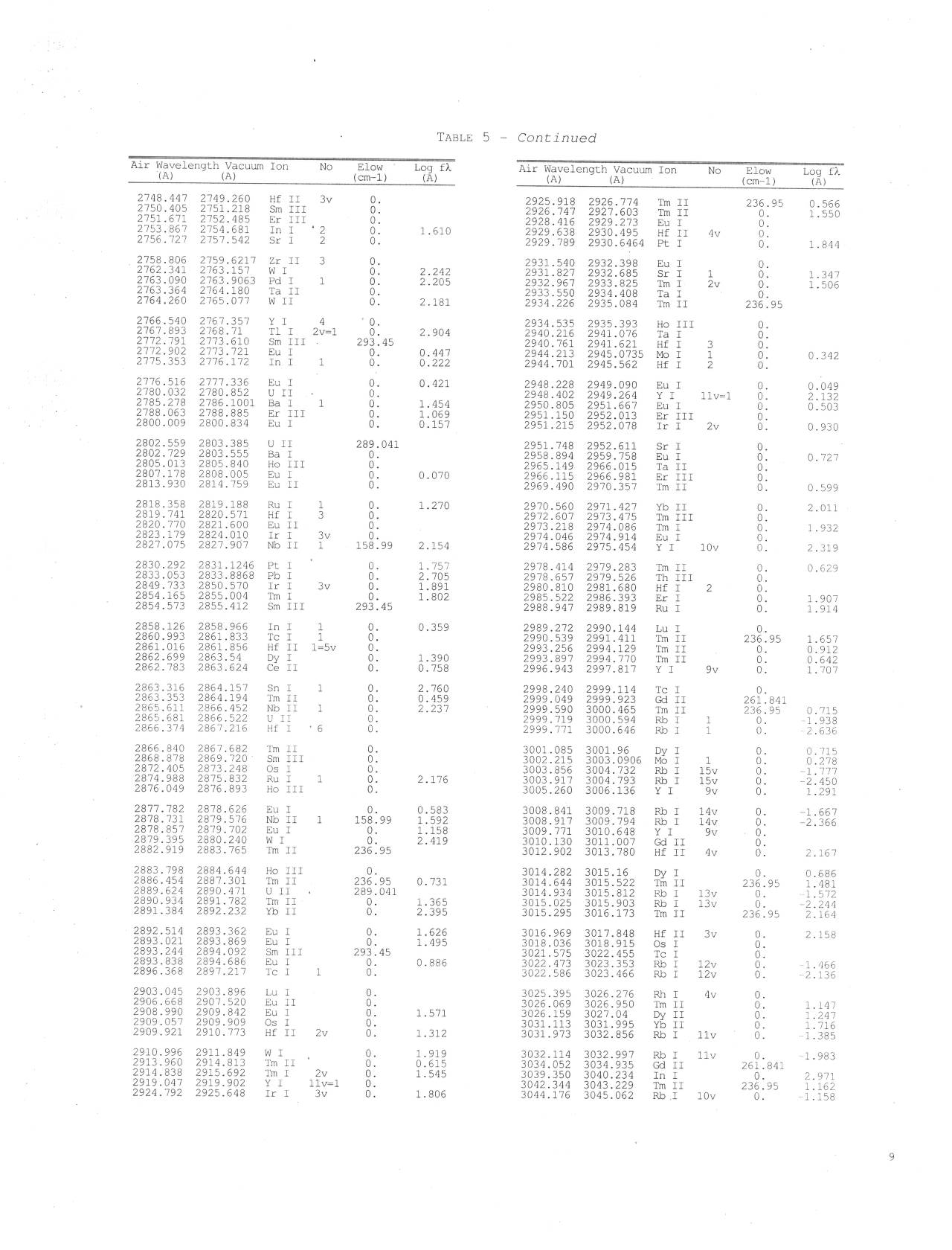
Need Ultraviolet (UV) lists of molecular, atomic, solar absorptions between 2900 A - 2960 A (290-296nm)
looking like this image showing a line list identifying molecular species |
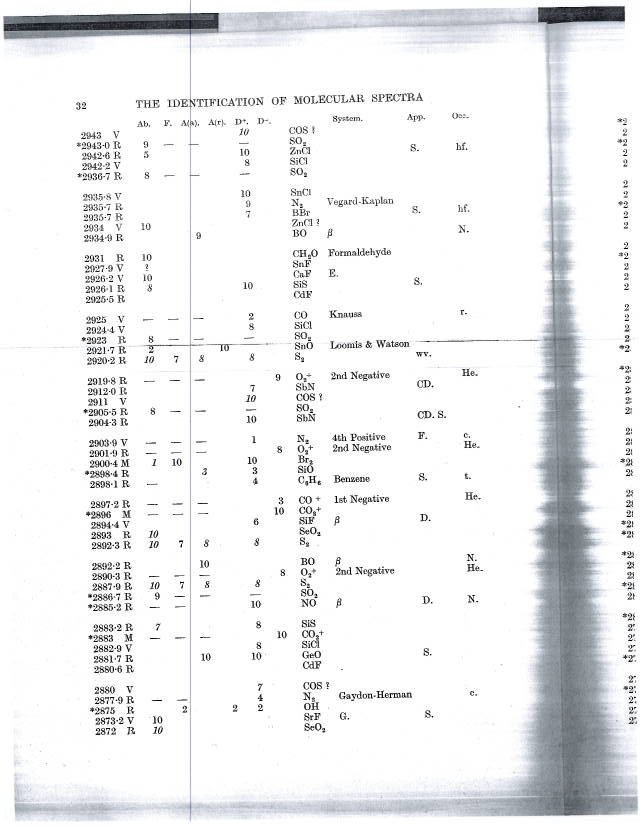
here is another example
GOT UV SPECTRA ? :
Read this PDF if you research in Ultraviolet spectra (molecular) maybe we can collaborate and share some resources
CLICK here to
 send me an email
 GO BACK to my home page
Sign My
Guestbook
View My
Guestbook
Welcome amateur astronomer number

hits counter
After I read about the
Cycle 2 call for amateur proposals in Astronomy Magazine to use the
Edwin P. Hubble orbiting space telescope in late 1990 I devoted 7 months researching and preparing for it.
Then I submitted my proposal back in early 1991 for AMATEUR use of the orbiting
Hubble Space Telescope to research the
atmosphere of  Saturn's
largest moon
Saturn's
largest moon  Titan and after a
long anxious wait it was ACCEPTED in 1992 and the observation occurred in 1993.
NOTE: the amateur program ended quite a while ago--sorry
Titan and after a
long anxious wait it was ACCEPTED in 1992 and the observation occurred in 1993.
NOTE: the amateur program ended quite a while ago--sorry
Instructions and manuals
This was the instruction manual and application that I had to work with along with the technical details for the telescope
Using a technique called spectroscopy I researched Titan's atmosphere in the middle ultraviolet (UV) spectral lines in the UV spectrum using the Hubble's Goddard High Resolution Spectrograph (HRS/GHRS) (which was removed in the first servicing mission). This method is also called reflectance spectroscopy since I am seeing a reflection of our Sun on Titan and most of my spectra is the Sun.
The compound I was (and still am validating) searching for is
formaldehyde (CH2O)
 remember that "stinky" gas from your biology class with those
specimens you dissected ? Well that's what I'm looking for.
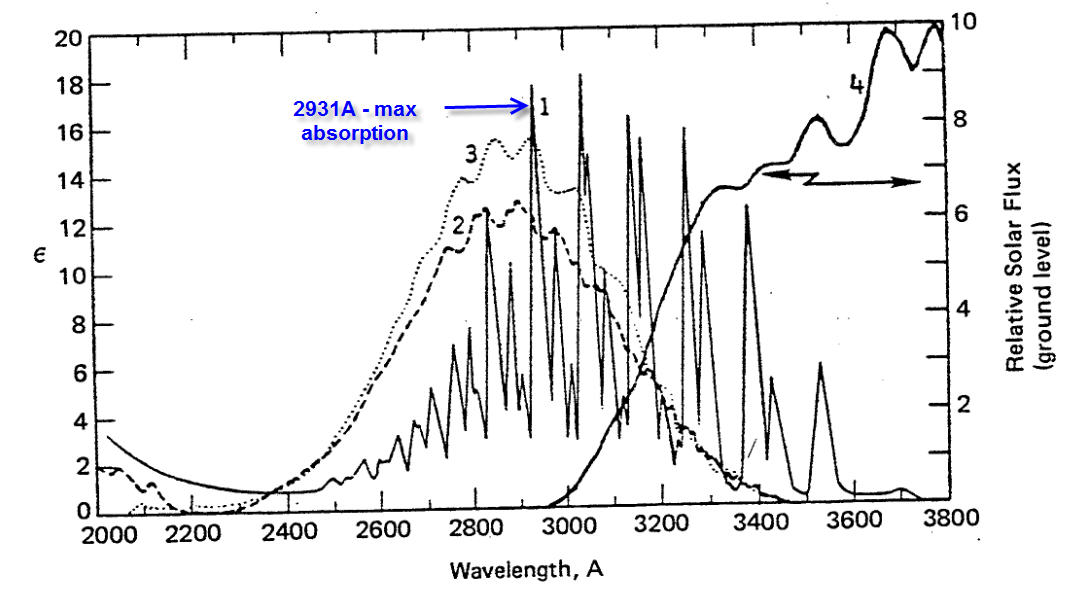
hi-resolution UV spectra of formaldehyde would look like this and 2931 is strongest peak where I centered the instrument on!!!!
remember that "stinky" gas from your biology class with those
specimens you dissected ? Well that's what I'm looking for.
hi-resolution UV spectra of formaldehyde would look like this and 2931 is strongest peak where I centered the instrument on!!!!
While I was researching I found a connection with
hydrogen cyanide (HCN) (discovered by the
Voyager 1 spacecraft More on Voyager
) and
formaldehyde . When they combine
purines can form that can possibly lead to adenine which is a base for
DNA (this is the article I found by accident that became the basis for my observation).
Titan is probably the most Earth-like body in our solar system , which is the reason why I became so mesmerized and interested in Titan. ( Sorry Mars )
Saturn was and still is my favorite planet to observe due to it beautiful rings, so after Voyager 1 observed Saturn I watched a
NOVA documentary "Resolution on Saturn"
(Season 8 Episode 10) that would literally change my life 10 years later! just added:
here is the transcript see page 12
My inspiration was
Tobias (Toby) Owen who spoke of Titan and its
Infrared spectra highlighting HCN and that stuck in my head and between studying the Oort Cloud, Beta Pictoris and Titan I choose Titan!
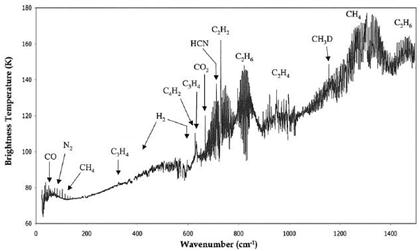
Just like our precious Earth - Titan also has an atmosphere which is dominated by molecular nitrogen (N2), along with hydrogen (H2), carbon monoxide (CO) and carbon dioxide (CO2). Also Titan is believed to have continents, oceans, and even a greenhouse effect.
Finally Methane (CH 4 ) shares the same characteristics as water does on Earth by existing in 3 forms (solid,liquid and gas), known as the triple point , just like water does here on Earth ...an amazing body right here in our own solar system only 1,277,566,066 kilometers away.

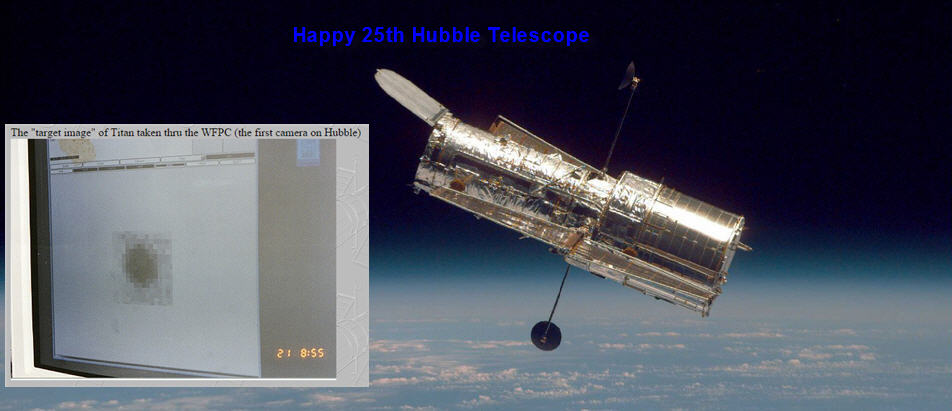
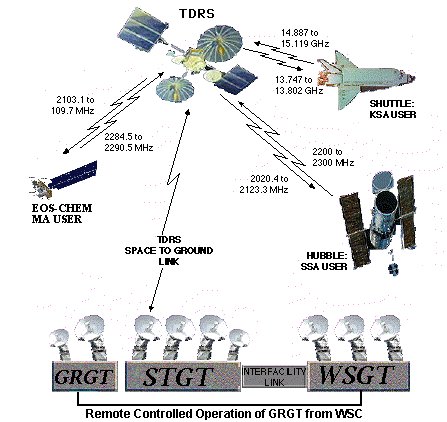
Sorry I don't have any pretty pictures to show all of you from the Hubble. But, I do have a target image of Titan from Hubble (taken thru WFPC1) , but its nothing fancy. This is what my data looked like taking real-time when I was in the observation room waiting for my data and competing with the Space Shuttle for use of the TDRS satellite!!
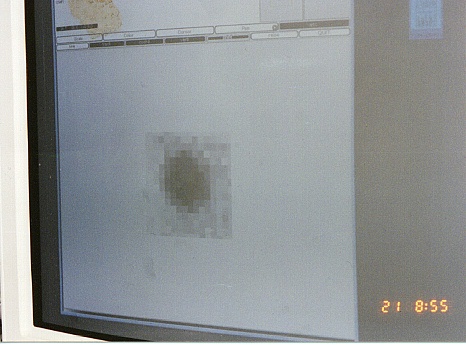
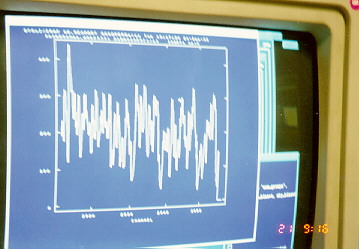
They actually used a guide star for tracking and locating Titan . This is more common for fixed based rather than moving objects!

Astronomical spectroscopy is just as valuable to astronomy as images are - if not more. Even though imaging is quite easier, spectroscopy tells us valuable info about the composition, velocities, atmospheres, doppler/red shifts and lots more. More About Spectra and How They are Represented
More about the history of the Amateur Program and the AAWG
Amateur Astronomers and the Hubble Space Telescope .Two other New Jersey Amateurs also did work on the Hubble
MORE THAN ANY OTHER STATE!!!!New Jersey Hubble Amateurs
Timeline of how it happened
Key Dates pertinent to my research and observation
- Christiaan Huygens, 1629-1695 discovers Titan in 1655
- Gerard Kuiper discovers Methane on Titan in 1944
- Voyager 1 Launches September 5, 1977
- Voyager 1 closest approach (C/A) of Titan November 12, 1980 which threw it out of the plane of our solar system | Voyager 1 portrait of the planets
- Broadcast of NOVA documentary "Resolution on Saturn" (Season 8 Episode 10) on August 28, 1981 highlighting Yoyager 1 that would literally change my life 10 years later! | click for the video here | or click here for the transcript see page 12
- The first director of STScI, Riccardo Giacconi, announced in 1986 that he intended to devote some of his director discretionary time to allowing amateur astronomers to use the telescope
- April 24, 1990 Hubble Telescope launches on the Shuttle Discovery
- Around December 1990 I saw the announcement in Astronomy magazine about the Amateur opportunity and I mailed in for the application and paperwork and received the following manuals:
- Research started around January 1991 and I was deciding upon: Titan, Beta Pictoris or the Oort Cloud.
- Until I came across the Formaldehyde connection to HCN and decided Titan!!
- Here is the printed search from the library (pre-Google) of how I found it and made the connection.
- two sources of the Formaldehyde CH2O UV spectra needed for the instrument and filter grating CH2O Rogers and molecular line list by Pearse & Gaydon which was the holy grail for me
- 7 months later I completed the proposal after hours and hours of research in many libraries in New Jersey and New York City The FAQ's covers the process too,
Besides a crash-course in ultraviolet (UV) spectroscopy and trying to find where Formaldehyde is in the UV, I had to study Hubble's instruments and filter details about Titan's atmosphere and chemistry at numerous libraries ( remember Google and internet weren't mainstream then )
This illustrates the data complexity I encountered- Proposal signed and mailed : 7/27/1991
- Receipt letter: 8/2/1991
- Acceptance letter : 7/28/1992
- Letter from Carl Sagan and additional notes from him : November 1992
- Communicated with Gerhard Herzberg June 1993 who won the Nobel Prize for Chemistry in 1971 | 2nd Letter | 3rd Letter
- September 10, 1992 - Visit at Space Telescope with the other Amateurs to schedule and program our observations Press Release of myself and the other Cycle 2 Amateurs
- Observation occurred: 9/21/1993
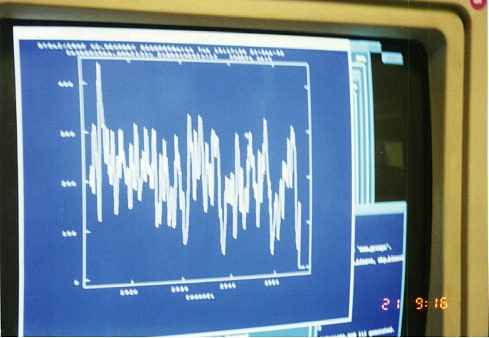
real-time image of my spectra when I was at the SpaceTel Institute competing for access to the TDRS satellites against the Space Shuttle STS-51 which also was rescheduled an extra day along with my observation !!!
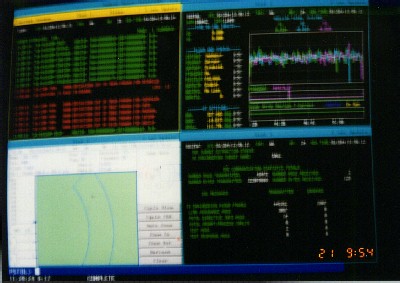
other real-time data including the guide star they used to track and find Titan in the bottom left corner.- Visit to JPL/Caltech for a Cassini programming meeting: October 1993 ( met Toby Owen, Loni Lane and others involved in the Cassini mission and ultraviolet spectra )
- Cassini Mission launches October 15, 1997
- Hubble Amateur program ended Sky&Telescope 1997
- Huygen's probe deployed on December 25, 2004
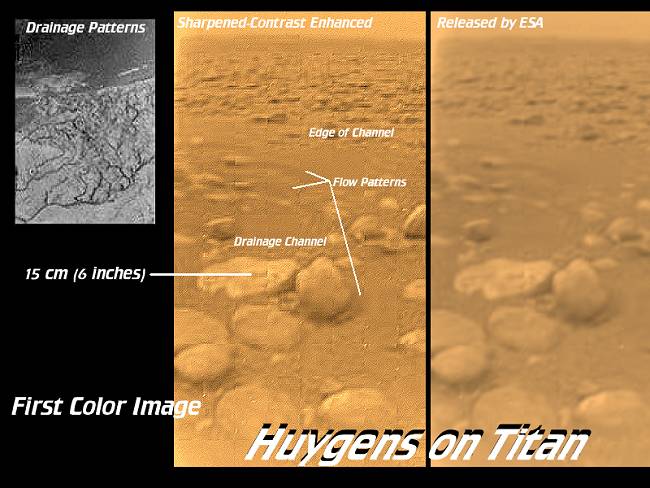
- Huygen's probe landed on Titan on January 14, 2005 I was at NASA Goddard watching it live with other NASA Planetary Scientists that I have become friends with over the years
- [Documentary] Destination: Titan
April 2017 - I was at Titan Through Time (TTT) at NASA Goddard again and was asked for posters about both my
-
experience and
how I applied for access as an amateur to use the Hubble to research Titan . And of course
-
the scientific and observation end of it
- Also got to see the James Webb Telescope and other cool things Click Here for pics
- Sept 15, 2017 - Cassini runs out of fuel and to protect its moon's plummets into Saturn PBS NOVA Cassini Saturn Mission Documentary 2017
- Cassini End of Mission Commentary NASA JPL
- Diagram illustrating the data complexity I encountered Diagram illustrating the data complexity I encountered
Brief history of the Amateur Program conceived by its original director
The first director of the STScI, Riccardo Giacconi, announced in 1986 that he intended to devote some of his Director Discretionary time to allowing amateur astronomers to use the telescope. The total time to be allocated was only a few hours per cycle, but excited great interest among amateur astronomers.
Proposals for amateur time were stringently peer reviewed by a committee of leading amateur astronomers, and time was awarded only to proposals with genuine scientific merit which did not duplicate proposals made by professionals and which required the unique capabilities of the space telescope. In total, 13 amateur astronomers were awarded time on the telescope, with observations being carried out between 1990 and 1997. One such study was Transition Comets -- UV Search for OH Emissions in Asteroids. After that time, however, budget reductions at STScI made the support of work by amateur astronomers untenable, and no further amateur programs have been carried out.Additional links and references
- Here is how it ended
- Hubble Amateur program ended Sky&Telescope 1997
- Amateur Astronomers and the Hubble Space Telescope by Max Mutchler of STScI
- Interview from 2015
- Giaconni's annoucement was at AAVSO's 75th Anniversary
- Cycle 2 1992
- New Jersey Hubble Amateurs
-
Electromagnetic Spectrum is rather large area
of radiation ranging from the RADIO to
GAMMA RAYS.
We are used to seeing the visible spectrum , but our Sun produces many other forms of radiation most commonly known to us is the visible spectrum (the rainbow & prisms ) which Isaac Newton discovered. The region I studied was the Ultraviolet or UV region of which we cannot observe from the ground. Rockets, satellites, or high-altitude balloons are the only ways we can observe this region.
This is because stratospheric ozone layer screens out much of our sun's harmful UV rays. Here is an illustration of the radiation that surrounds Earth and what radiation reaches Earth.
the ultraviolet spectra I am researching looks like this image .
Spectra can appear in many forms. Here are a few examples: click here for some examples .
Click here for various Infrared regions taken at different regions of the spectrum
Frequently Asked Questions ( FAQaA's) and Answers
Click here the FAQ&A page . Some are the
questions are a blast!!
Images of me and my Observation along with references
Click here for images of me and my observation along with references for additional reading. I now have my photos of the Shuttle launch and the target image of Titan on this page.
Here is a diagram of how my observation occurred.
Click here for my Wide Web of Astronomy page
About the Hubble and its operations
The Hubble Space Telescope is a joint NASA and ESA collaboration and is controlled at the Goddard Space Flight Center in Maryland. The scientific end of the Hubble is performed at Space Telescope Science Institute (STScI) also in Maryland
HST was placed in orbit on April 24, 1990 by the Space Shuttle Discovery on STS-31.
The first servicing mission was done by Space Shuttle Endeavour on STS-61. Just recently STS-82 mission the second in a series of planned servicing missions to the orbiting Hubble Space Telescope was just completed.The Hubble Space Telescope (HST) images and other sites
- Images from the
Space Telescope Institute , also Latest Releases and
more public information
- HST images by object .
-
Space Telescope's
European Coordinating facility - HST's UK Support Facility
My Current Schedule of Presentations Date Location 04/27/96 UACNJ Observatory,Jenny Jump Hope NJ (8pm) 05/25/96 National Space Society's ISDC Convention, Grand Hyatt, New York City 04/02/97 S.T.A.R. Astronomy CLub, Holmdel Park Activity Center, Holmdel,NJ 04/22/97 Union County College (Sperry Observ) Continuing Educ. class (8pm) 04/24/97 Rutger's Univ/Camden Astronomy class (~7pm) 05/30/97 Prodigy online chat, 9:30 p.m. ET Astronomy Chat Room here is a transcript of the discussion sometime in '97 UACNJ Observatory,Jenny Jump Hope NJ (8pm) 04/09/98 MMAS - Morris Musuem Astronomical Society, Morristown,NJ (~8pm) 09/12/98 UACNJ Observatory,Jenny Jump Hope NJ (4 pm)
Contact me by email if you need more information about these events, or if you would me like to speak to your group. (Depending on the date, time and location)
Some of the other Cycle 2 amateurs who also used the Hubble that you can email to are
- Harald Schenk of Wisconsin with Jim Secosky. Their research was searching for OH emissions in asteroids to see if they were dying comets. using the FOS (Faint Object Spectrograph)
-
Karl Hricko also of New Jersey . His research
was searching for a bridge connection between a Galaxy and Quasar.
using the WFPC (Wide Field Planetary Camera)
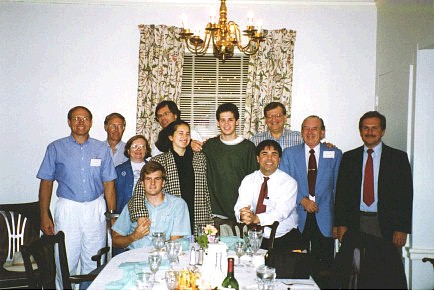
Click here to see a group photo of the Cycle 2 amateurs and some staff members of the Space Telescope Science Institute . This was from a dinner we had on the campus of Johns-Hopkins during our orientation.
Some of the other Amateurs from other cycles
- Jim Flood (also from New Jersey) Currently he is the LAST amateur scheduled. His research is the Morphology of the active nucleus and radial filaments of NGC 1808, using the WFPC2 instrument (scheduled for August 1997 )
- Ray Sterner (cycle 1)
or his
WWW Page
Here is brief listing of all 13 amateur programs by Max Mutchler at STSci .
The demise of the HST amateur program. Sky & Telescope, Jun97, Vol. 93 Issue 6, p97
I was very fortunate to have the assistance throughout my research from many professional astronomers and scientists worldwide. Many of whom I met and was inspired by....
Special thanks to: Toby Owen, Dennis Matson (JPL), Ellis Miner (JPL), Arthur Lane (JPL), Carl Sagan, Gerhard Herzberg, Peter Smith (Harvard), Rob Kurucz (Harvard), Gail Anderson (Air Force), Janet Mattei , John Westfall, Steve Edberg, Keith Noll, Peter Reppert, Tad Pryor, Gordy Bjoraker, Max Mutchler, Krista Rudloff, Ray Villard, Cheryl Gundy, and many others for all their inspiration, patience, guidance and assistance in this once in a lifetime opportunity.
And most of all Riccardo Giacconi or making the opportunity for us amateurs!
Letters and Correspondences
Acceptance letter from Ricardo Giacconi Added on 3/1/2012
Here is the Acceptance letter I received from Giacconi. I was so nervous to open the envelope.Letters from Gerhard Herzberg
I wrote to a famous Nobel Prize winning scientist, who won the Nobel Prize for Chemistry in 1971 Gerhard Herzberg who a Harvard scientist suggested I contact for molecular spectra that I was looking for.
We corresponded three times in 1993 !!!
Letter from Carl Sagan
My letter from Carl Sagan | along with communication with Dr Sagan and Titan notes he sent me
About Cassini's Radioisotope Thermoelectric Generator (RTGs)
YouTube Playlist of RTG videos
The Dept of Energy (DOE) was responsible for producing the RTG (Radioisotope Thermoelectric Generators) for NASA which are necessary to power the spacecraft especially since no battery can last that long, nor can it recharge since it will be so far from our sun. Such a power supply source much be devised.
- NASA Struggles over Deep-Space Plutonium Power
- Washington Post: the fuel NASA needs to make it to the edge of the solar system — and beyond
- Oak Ridge National Labaratory achieves milestone with plutonium-238 sample
Radioisotopes: Energy for Space Exploration
Plutonium-238 (Pu-238) in ceramic form is used to produce heat to generate electricity for these spacecrafts that leave Earth's orbit
RTG's have been used in countless spacecrafts ( Pioneer 10 & 11 , Ulysses, Voyager 1 and 2), and even Apollo missions, and numerous military Earth orbiting spacecraft and most recently Galileo .
- Researcher Provides a Historical Perspective for Plutonium Heat Sources Los Alamos
- RTG -- History, the Curiosity, and New Horizons DOE
- What is an RTG and why does it use plutonium? PDF FAQs
- Nuclear Generators Power NASA Deep Space Probes (Infographic) space.com
- Plutonium 238 Wikipedia
- Radioisotopes: Energy for Space Exploration Video by Dept Energy
More RTG info
CLICK HERE for a more detailed explanation about Cassini's RTG and their safety.
Additional files, images, etc on RTGs can be found here alsoMore on RTG's images, PDFs
Additional Links
- The Voyager Probes – Earth's First Starships Good reference and summary of the Voyager missions
- Tabular data of our solar system (Bill Arnett/SEDS)
- More onUV Radiation (from Encarta)
- NASA PHOTJOURNAL on SATURN
- My collection of spectral bookmarks
- Digitized Spectral Data
- Software
- Spectroscopy Magazine
- The Homepage for Chemists
- Spectroscopy FAQ
- Assorted Spectroscopy links
- Spectroscopy Tutorial
- Great Collection of Spectroscopy resources (wish I had this 5 ys ago!!)
- The spectrum of electromagnetic radiation (technical, but good diagrams)
- Other Ultraviolet spaceborne observatories/missions
- HITRAN (spectroscopy)
- Spectral Databases (HITRAN)
- USGS Spectroscopy Lab Home Page
- Analytical Spectroscopy Webcourse
- NASA's Spectroscopy Subnode of the Planetary Data System (PDS) at Brown University
- More info about Saturn (JPL-PDS)
- Galileo Ultraviolet Spectrometer/Extreme Ultraviolet Spectrometer Experiment
- Index of Voyager images of Titan
- UV & you
Living with Ultraviolet
Our Ozone Hole!
Protecting us from the Sun's harmful UV radiation
- Ozone Hole Watch (NASA)
- FAQ's
about our Ozone layer
See the Ozone Hole for 1996 (animated!!)
Pages where this is linked from :
- Hubble Space Telescope observing programs by amateur astronomers
- NJ Hubble Amateurs
- NJ Area Observer Links
- Saturn Titan page -
- Hubble amateur observing programs -
- Stargazer Online
- CAS online
- NSS Pro-Cassini Rally Reports
GO BACK to my home page
Email to me